Sci-Fi: Future Coder
Sometimes it is useful to use Science Fiction to help us imagine where today’s generative AI and technology trends and advances could lead us. This short story imagines a day in the life of a coder in the distant future. It focuses on technology trends such as AR/VR, crypto payments, artificial intelligence, generative AI, and brain interfaces.
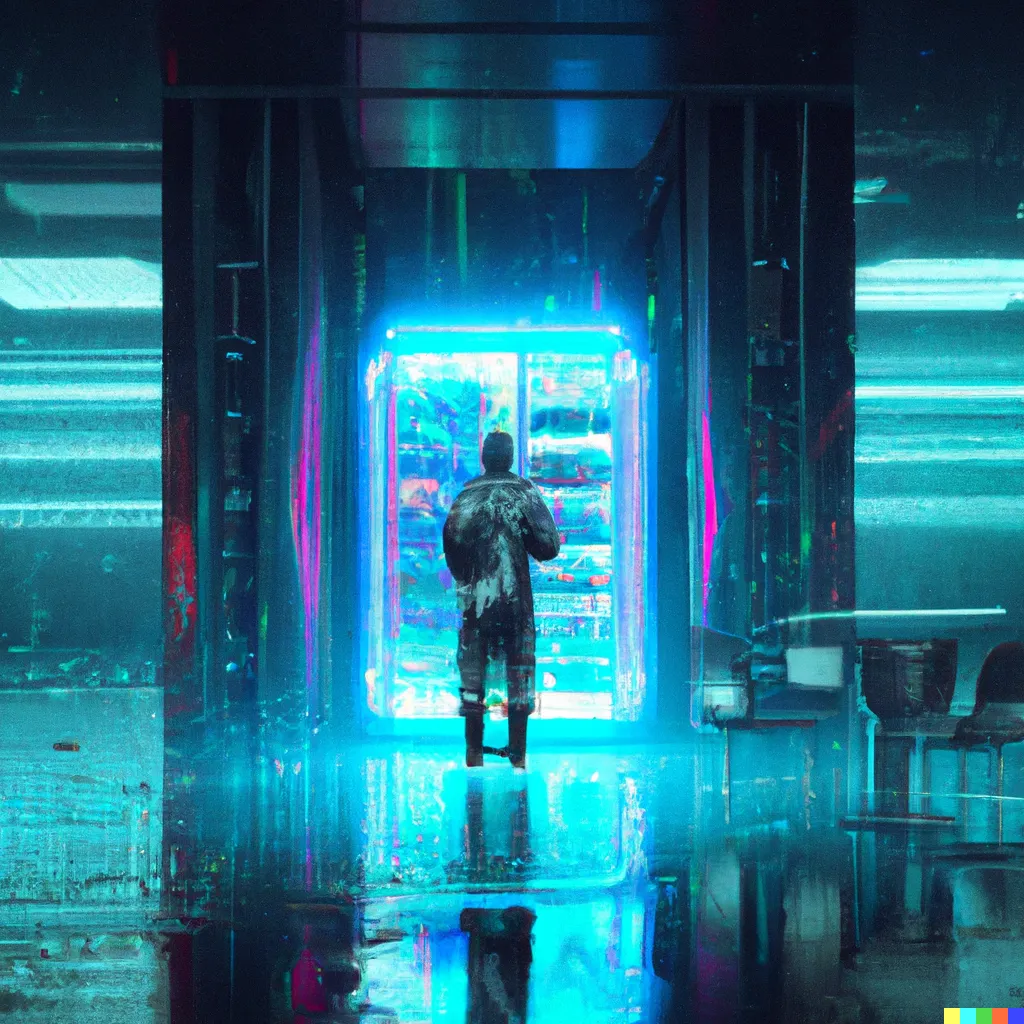
Future.Coder.Human stepped out through his apartment door into the common areas of his Tower block. He no longer used his state name that his parents had given him. He had switched to his primary domain name instead. His many online identities are his true identity nowadays. His friends just called him Foo.
‘Steak’ for lunch
Having just disconnected from his virtual work space, it was time to take care of his physical needs — a routine that took place a few times each day. Bathroom, shower, sleep and most important, nutrition. He arrived at the nutri-kiosk machine at the end of the corridor and stepped forward to allow it to scan the chip he had embedded in his wrist.
‘Welcome Foo! It’s time for your second meal of the day.” The machine’s voice broadcasted into his ear-pod. “Your most recent medi-scan indicates that you need more fibre in your diet. Your personalised nutri-bar is being prepared for you. Please wait a moment.”
The kiosk’s delivery flap opened and a white rectangular box, resembling a bar of soap, slid out. A second notification buzzed in his ear, this time from his crypto-wallet, indicating that a transaction of a fraction of a Crypto coin has been deducted. Foo absentmindedly grabbed the bar and sat down at one of the nearby tables. Some other people from his building were already sitting at the table, each eating their white nutri-bars, but no one acknowledged him. Their lives were taking place in virtual worlds and they were only here out of necessity, to rehydrate and support their bodies before jumping back into their ‘real’ worlds.
Foo looked down at his white bar and pulled out his smart-screen. The meal app loaded and he started to scroll through meal options. ‘Pasta bolognese, steak and chips, pizza…’. He chose the medium steak data file which immediately uploaded to his neuro-link. His wallet buzzed again, another micro transaction registered.
Upload to neuro-link completed. Today most people had neuro-links installed just after they were born. Foo had his installed when he was 18 years old. It was the first time that affordable prices and access to cutting edge neuro-links was possible and widespread. His smart-screen indicated that his meal profile was loaded in his neuro-link and he could start to eat. Foo cut a piece of white ‘soap’ bar and closed his eyes. He lifted it to his mouth and took a bite. As his teeth bit down on the bland, tasteless, soft bar — the signals to his brain from his mouth and tongue were overridden by the neuro-link… Delicious! This was the best steak he had in a while. The texture and taste brought back nostalgic memories of when he was a kid and his grandfather would barbecue steaks in the back yard. Juicy, tasty and cooked perfectly, this ‘steak’ was great for the planet, cheap and contained the exact amount of fibre and nutrients his body needed today.
Taking the last bite, Foo picked up his smart-screen to kill the meal app and stop overriding his taste neurons. The lingering taste of steak disappeared immediately. That really was one of the better steaks he had in a while, he clicked on the app details in the smart screen and checked out the publisher. It seemed to be a verified coder with great reviews. He clicked on the 5 star button and gave a positive review. Once again he immediately gets a wallet transaction notification. This time though, it is a positive micro transaction in his favour. Payment for his positive review.
When he was younger and whenever his crypto wallet was running low, he would try free meal apps from unverified developers. Most would be ad-meals with advertising messages droning on in his ear-pod between every few mouthfuls. Some would be AI created meals that would be so strange you quickly learn to avoid them. Others would be poorly coded buggy meals that would not synchronise with each bite and completely throw off the experience. Sometimes he would accidentally load a hoax or compromised app which would make his steak taste like rotten fish or worse. His brain would interpret horrible tastes that were so bad and potent that he would be vomiting for the rest of the day.
Nowadays he would rather skip a meal app and simply eat the tasteless nutri-bar unless he could pay for a premium verified app.
Home in the super-city
As Foo walked back into his apartment he could hear his wife talking to someone in her work-pod. The pod door was half open and he could see her gesturing animatedly, pacing around the pod with her ARVR glasses on her face. Clearly she was in a heated work meeting. She saw him through the periphery of her headset and gave him a quick smile. He smiled back and closed the pod door to give her some privacy.
The apartment was otherwise quiet. The kids were still at in-person school and would return home later using a self driving robo-taxi. School was one of the few activities that was still held in person. Studies following the early ‘stay at home pandemics’ showed that homeschooling was unhealthy for kids and they needed school to socialise. Nowadays the teachers were all AI edu-bots streamed as holograms to ensure a cutting-edge and consistent education in all schools — but the kids could create arts and crafts, run around, make friends and enjoy the playground.
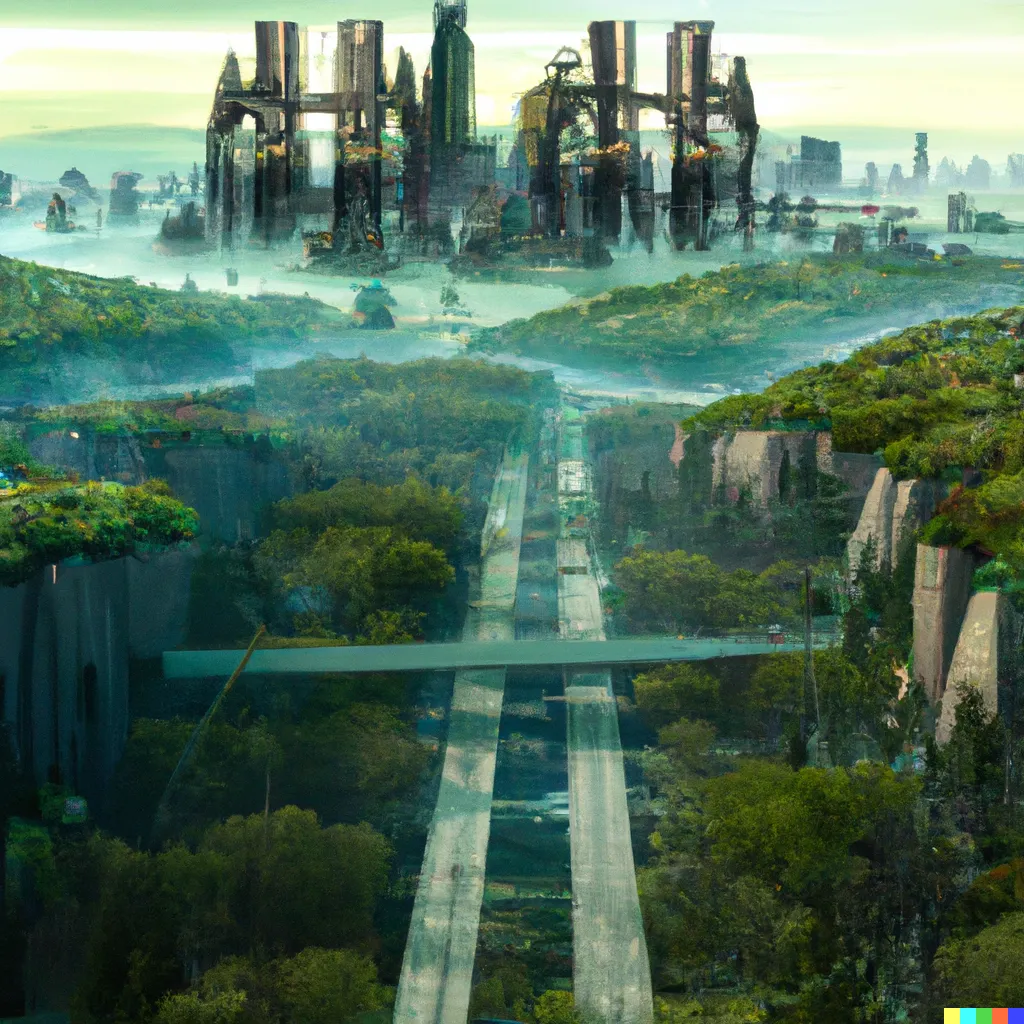
He walked through the living room out to the terrace and looked out from his high floor. The air was clean and smelt sweet. He vaguely remembered growing up in smelly and hazy polluted cities but air pollution had been eradicated years ago. The super-city spanned out around him — towering ultra high skyscrapers surrounded huge open green parks. The few remaining roads hosted self driving electric robo-taxis which weaved between each other with a hum.
As he stretched his back, he looked out between the towers and could see a thick carpet of forest until the horizon. Most of the worlds 22 billion people live in similar towers in super-cities around the world. As climate change quickly transitioned into a fully fledged urgent crisis, the suburbs and smaller towns were abandoned and gave way to extensive rewilding projects all over the world. The forests reclaimed their land and now formed huge carbon capture systems regulating the planet’s atmosphere. The super-cities rose high above these new wild forests. The motorways and towns in between were barely visible as nature reclaimed them with a speed and aggressiveness that surprised even the rewilding authorities.
In the distance Foo could just about see his City’s Utility Park glimmering in the sun. Each Super-City had it’s own twin Utility Park which made it self-sufficient. Connected to the city through underground roads and fully operated by robots, the park contained vast solar panel arrays, wind turbines, cloud data centres and battery storage. It also hosted all the factories, steel and semi-conductor foundries, green hydrogen production and robot plants required. Completely self-sufficient and emission free, these parks provided the super-cities with clean energy, robots and anything that needed to be manufactured.
ARVR Mountain Biking
As he finished stretching he checked the time by tapping his wrist. His neuro-link fired into action sending signals to some parts of his brain related to optics. Floating a couple of feet in front of his face an info panel appeared. The panel was not really there, but his brain was being tricked into seeing it. The panel showed Foo the current time and his next appointment. He had an hour for some exercise before it started.
The city had thousands of pools, running tracks and bike trails which he could use for exercise and to socialise in-person, but today he only had time for some virtual exercise. He walked back inside to his private gym and jumped onto his stationary bike. He pulled out his smart-screen and started browsing exercise apps. Most were AI generated — strange trails in fictitious worlds which bent the rules of physics. He was looking for something more ‘real’ though and loaded up a replica Alpine MTB trail published by a verified coder.
He reached out for his ARVR glasses and secured them to his head. Even though some of the newer neuro-link prototypes claimed to offer immersive VR experiences — his current neuro-link only had very basic AR capabilities. For immersive VR he needed his brand new glasses.
As soon as the glasses were on, he looked around and took in the Alpine views from the start of the trail. The realism still surprised him each time he entered a VR world with these new glasses. The usual crypto-wallet micro transaction took place automatically and he was ready to go. The app started to upload to his neuro-link and it activated a couple of seconds later — immediately he could feel a fresh mountain breeze on his face as he looked down at the valleys below. The neuro-link was firing signals in different parts of his brain to make him feel the motion, the wind and the feeling of acceleration and jumps. This made the experience more immersive but it also worked to prevent the feeling of nausea that plagued the early standalone VR headsets.
A notification appeared at the bottom of the screen — a challenge received from another avatar. Another person on their own stationary bike, in another tower and probably in a different city. The challenge was a crypto-challenge which was a smart-contract dictating that the winner would automatically receive a reward from the loser’s wallet. Foo needed the excitement and accepted the wager. Instantly the challenger appeared besides him on an old school hardtail MTB and smiled. Foo smiled back, the tiny cameras in his headset reading his facial expressions and replicating them accurately on his avatar. He then pushed down on his right pedal and felt a kick of adrenaline as the cold wind filled his face and the ground dropped out from underneath him. His heart rate reading floated a couple of feet in front of him, and he drove down on the peddles and cruised between the trees. The challenger was trailing him by a couple of meters but he looked back and could see him gaining ground. As he raced through a muddy puddle he could actually feel the cold sticky mud splash up against his legs and face. Suddenly his front wheel slipped as he took a turning too late. He slammed against a tree and felt a sharp pain in his right shoulder. “Damn neuro-link” he muttered under his breath — he forgot that the pain setting is enabled during crypto-challenges.
He pushed even harder on the pedals as dust and small stones showered against his face, the stones stung as they hit but he wasn’t going to give up now. A few minutes of climbing and the alpine view opened up again in front of him. The wind was stronger up here and the pedals of the smart stationary bike needed to be worked even harder but he powered through the rest of the trail to cross the finish line first. He had won the challenge and he heard the crypto-wallet notification acknowledging his reward. Immediately he pulled off his glasses and stumbled off his bike panting and sweating, attempting to catch his breath. He quickly killed the app on his smart screen and his shoulder stopped throbbing immediately.
He tapped his wrist again — Shit! He was going to be late and he couldn’t blame the commute anymore. He ran into the shower.
Back to work
There were only four categories of roles left in a world of robots and advanced AI.
The caregivers
The most common and important role is that of the caregivers. These are people that took care of other people in-person. Carers for the elderly and nannies for babies. Supervisors at schools. Mental health professionals, personal trainers, nurses and midwives. Police and firefighters. As technology advanced and people moved in and out of their virtual worlds and become more isolated, these jobs became more and more important and respected. It was an area where AI and robots failed dramatically.
The idle and wealthy
Then there are the idle and wealthy. These are people who have managed to create, build and deploy so many AI Models and virtual real estate that their crypto wallets have a constant inflow of micropayments. Each time their AI Model is interacted with, they get paid a tiny amount of crypto. Naturally, most created beneficial AI and deserved their wealth, but there were also many that deployed malicious AI which tricked, robbed and misinformed their victims while their crypto-wallets grew larger and larger. These idle and wealthy people were free to spend most of their time in the best and most expensive virtual worlds, taste the most sophisticated and cutting edge meal apps and live in the nicest physical world apartments and cities. When they got sick or injured they could pay for the best surgical robots and AI doctor diagnosis. Their kids went to the best schools with the latest versions of the AI teacher software. They could also undergo frequent neurosurgery to ensure that they always have the best neuro-links installed.
The high-level coders
All other professions over the years have merged into a single profession. Coders. Chefs code meal apps, doctors code surgical procedures and diagnosis apps, engineers code robot AI models that will build towers and wind turbines, lawyers code AI to generate smart contracts, architects code AI to draw blueprints and so on.
The most common type of coder are the ones that build virtual worlds. Known as Virtual-Architects, they design and build virtual experiences and fully immersive worlds. Some are employed by the companies that own the virtual worlds, but others spend their time building the millions of decentralised open worlds in exchange for virtual real estate and goods in those same worlds. Most of their work is AI assisted which explains why there are millions of continuously growing virtual worlds. Most of which are barren and unused and waiting to be discovered by the growing population.
The work of coders has changed over time. Source code is rarely written anymore — coding today is all about choosing the best AI models, engineering the best prompts and providing parameters to reign in the millions of erratic open source AI models and get them to generate the best output possible.
A modern day musician coder, for example, would not write a song or piece of music. They would train AI models to generate countless songs in the future. The models would be optimised to generate the best songs possible in the style of the musician, they would then deploy their AI models. Once deployed, thousands of AI created songs start to be uploaded to the web. Most of these songs would never be heard and will be archived eventually on some obscure server, but a few might be discovered. The few that are discovered might then be recommended to other people by their Recommender-AI. Every once in a while one will go viral, and each time a song is played, modified, copied or used in a virtual world then it’s encoded smart contract will activate and the musician’s crypto-wallet receives a royalty micropayment. The musician coder keeps on improving their AI models, to optimise their chances of a song going viral. The musician coder now dreams of deploying such a good AI model that they can become idle and wealthy and spend all their time in the best virtual worlds.
A doctor coder works in a similar way. They would spend their time training and engineering prompts for AI models to diagnose illnesses and offer an optimal prescription or prognosis. Their AI models are deployed and scan for symptoms reported by the billions of smart watches and wearables which upload a constant stream of anonymised data to the cloud. They generate their outputs and these AI diagnosis are downloaded back to the wearables. The user’s smart-screen will flash and notify the user that some disease has been detected in their body, along with a prescription, or perhaps an update to their nutri-bar requirements. If the user accepts the diagnosis then the smart-contract kicks in and a payment is made to the doctor coder. Once payment is made then the prescription is unencrypted and ready to be used. For the doctor coder though the stakes are higher, if a user flags a diagnosis as inaccurate, then the smart contract will deduct a penalty from their crypto-wallet, lower their rating and reduce their chances of engagement in the future. Again a good doctor coder with a breakthrough AI model hopes to become idle and wealthy as his diagnosis is used over and over again each time resulting in a welcome micropayment.
The Low-level coders
Foo is a special type of coder. He is a low-level coder who builds the foundation AI models which are then used by the higher-level coders such as the musician and doctor coders. These low-level coders actually do write source code and are constantly fixing bugs and updating the open source models. They make sure that they can scale, and are also responsible for security by identifying the hacked, malicious or malfunctioning models and taking them offline.
The work is difficult but each peer reviewed source code commit to an AI model adds Foo’s crypto-wallet address to the AI model’s smart contract. Each time the AI model is used by a high-level coder then the smart-contract sends a micropayment to Foo. Most low-level coders generate enough recurring micro-payments to be wealthy, but few choose to be idle because they know how dangerous a malicious AI model can be.
The Virtual Workspace
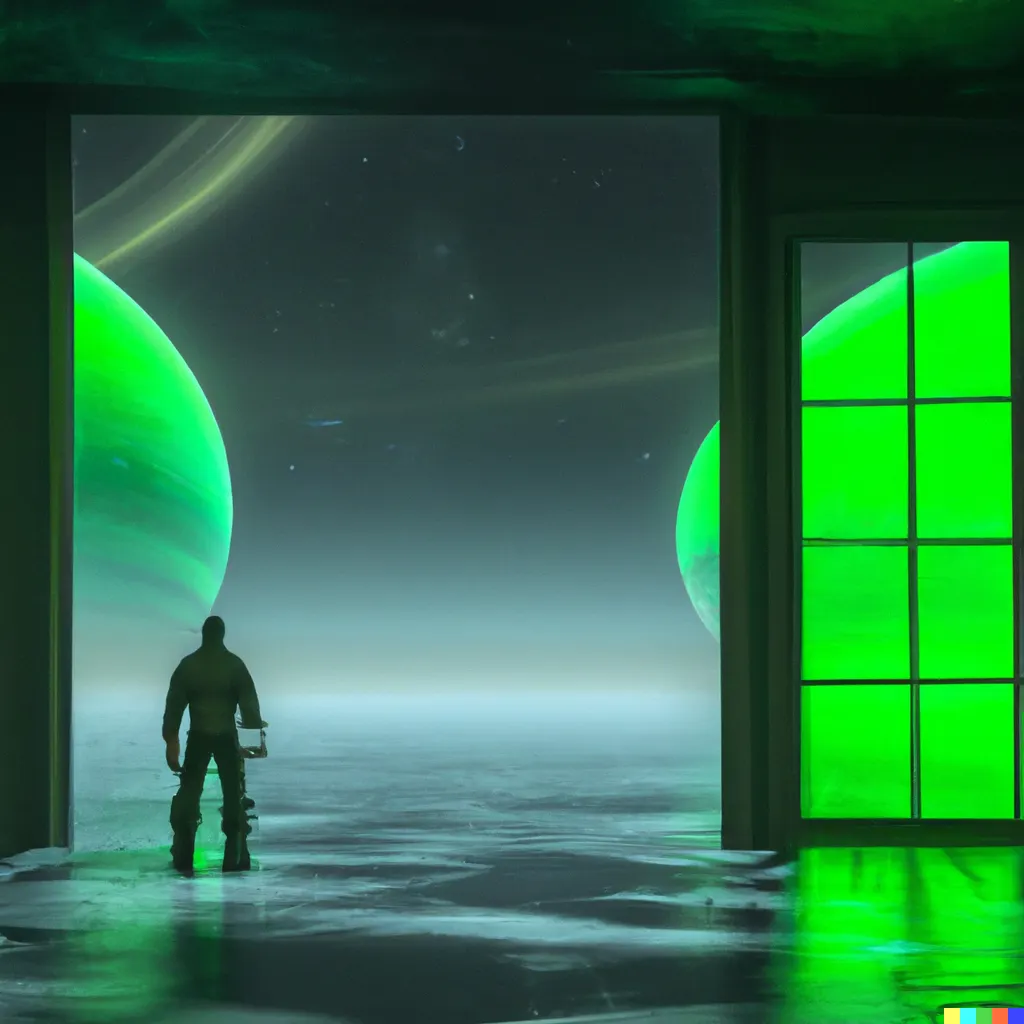
Foo rushes into his work pod and shuts the door behind him. He fumbles for his ARVR glasses and puts them on. The inbuilt retina scanner in front of the lenses activates and authenticates him. He is immediately immersed into his secure virtual workspace.
His avatar looks around a vast open room with large windows looking out into the darkness of space. A bright green planet with two moons is visible in the distance. He walks up to a large wall with telemetry displays showing his personal micropayment statistics, source code repository pull requests and the usual endless list of security warnings. He looks towards the virtual conference room and can see his team sitting around a large floating table chatting while they wait for him. As he walks towards them he starts to float slightly above the ground. Someone has been messing with the gravity parameter again — a typical office prank.
A low-level coder is always freelance and he rarely needs to rush into a meeting, but today’s meeting is urgent. Over the last few days he had been noticing new source code commits into the most extensively used core AI models from an unverified coder. Even though the code changes seemed benign, Foo was alarmed when he noticed that these commits had bypassed the usual review process. These were the highly secured core AI repositories and all modifications were meant to be reviewed for approval and strictly restricted to verified human low-level coders. In the last few hours the frequency of code commits grew exponentially. They were clearly no longer benign.
He sat down and looked around at his team. He was about to tell them that the worst case scenario was taking place — above billions of new code blocks committed this morning, the same inline comment declared ominously: “#This code block was generated by AI”.